
Detailed site investigation and remediation
of rural site impacted by burnt rubber tyres.
Contaminated site investigation, remediation and follow-up validation study
Background
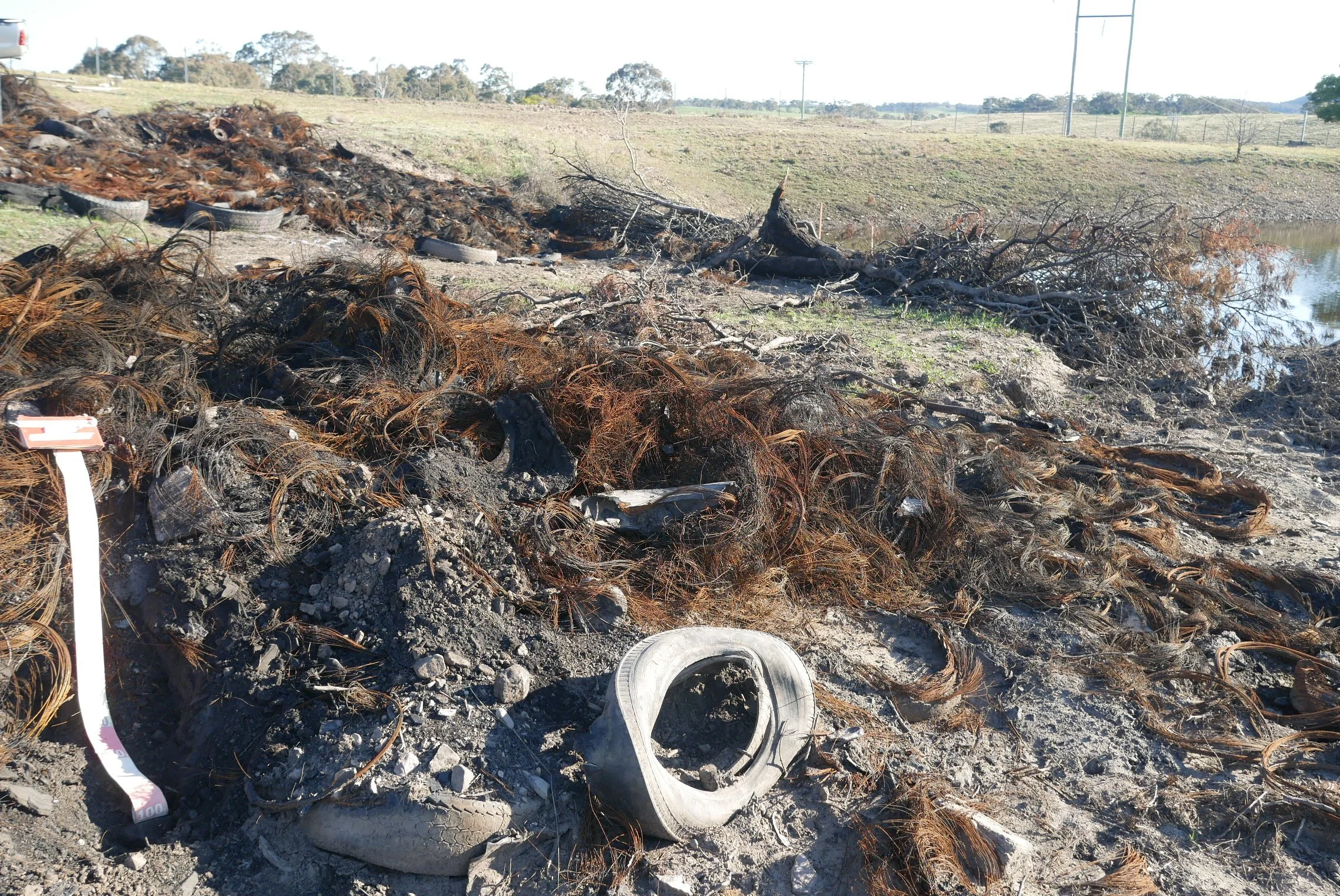
In August 2020, a large number of truck and car tyres caught fire at a rural site at Boxers Creek, NSW. The fire was extinguished by the NSW Fire Brigade, but there was concern that the burnt tyre debris may have contaminated the soil and water in the nearby dam..
Investigation
A detailed contamination site investigation was undertaken by Earthwise Environmental (EE). The investigation included a site inspection, soil and water sampling, and laboratory analysis.
The soil test results found elevated concentrations of total recoverable hydrocarbons (TRH) and zinc over the area of the burnt tyres. TRH exceeded the ecological screening level (ESL) and zinc exceeded the health investigation level (HIL).
Water test results from the nearby dam had slightly elevated aluminium concentrations (compared to dam water sampled further up gradient) but it did not exceed the assessment criteria.
Remediation
Given the exceedances of the assessment criteria EE outlined a remediation plan which involved the removal of the burnt tyre debris, mixing of the soil layers, topdressing the area with clean topsoil and revegetation of site with native grasses to return ground cover.
Validation
After the remediation was completed, EE undertook a follow-up validation study to confirm whether the site had been successfully remediated. Soil tests results confirmed TRH and zinc concentrations below the ESL and HIL assessment criteria and issued a clearance certificate for the client.
Conclusion
The case study demonstrates the importance of conducting a thorough contamination investigation and implementing appropriate remediation measures. EE was able to save the client time and money by outlying the detailed site investigation findings and including a remedial action plan within the one report. The follow-up validation study confirmed that the remediation was successful and that the site is now safe for future use.
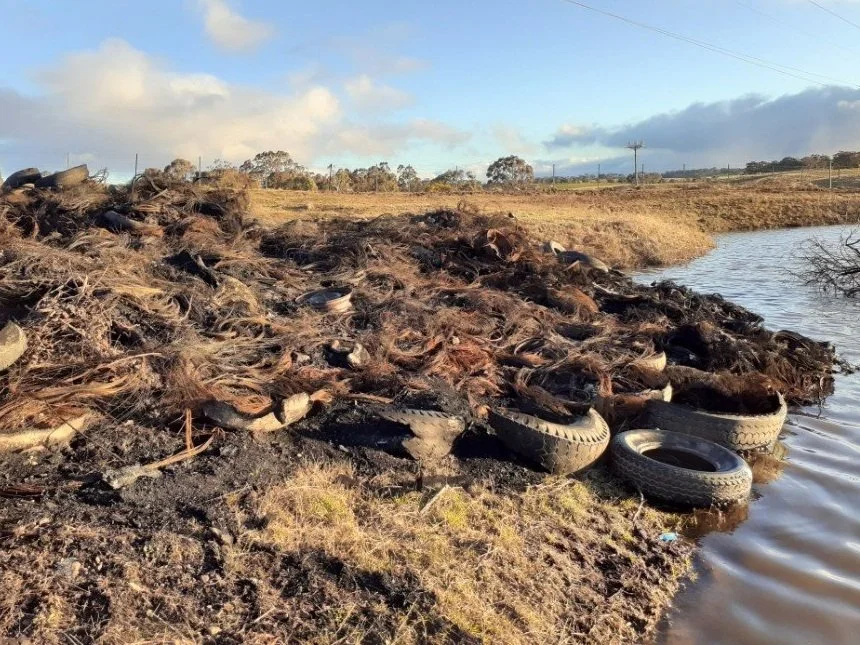
EE was engaged to undertake a detailed site investigation to determine the impact of burnt rubber tyre debris on local soil and water
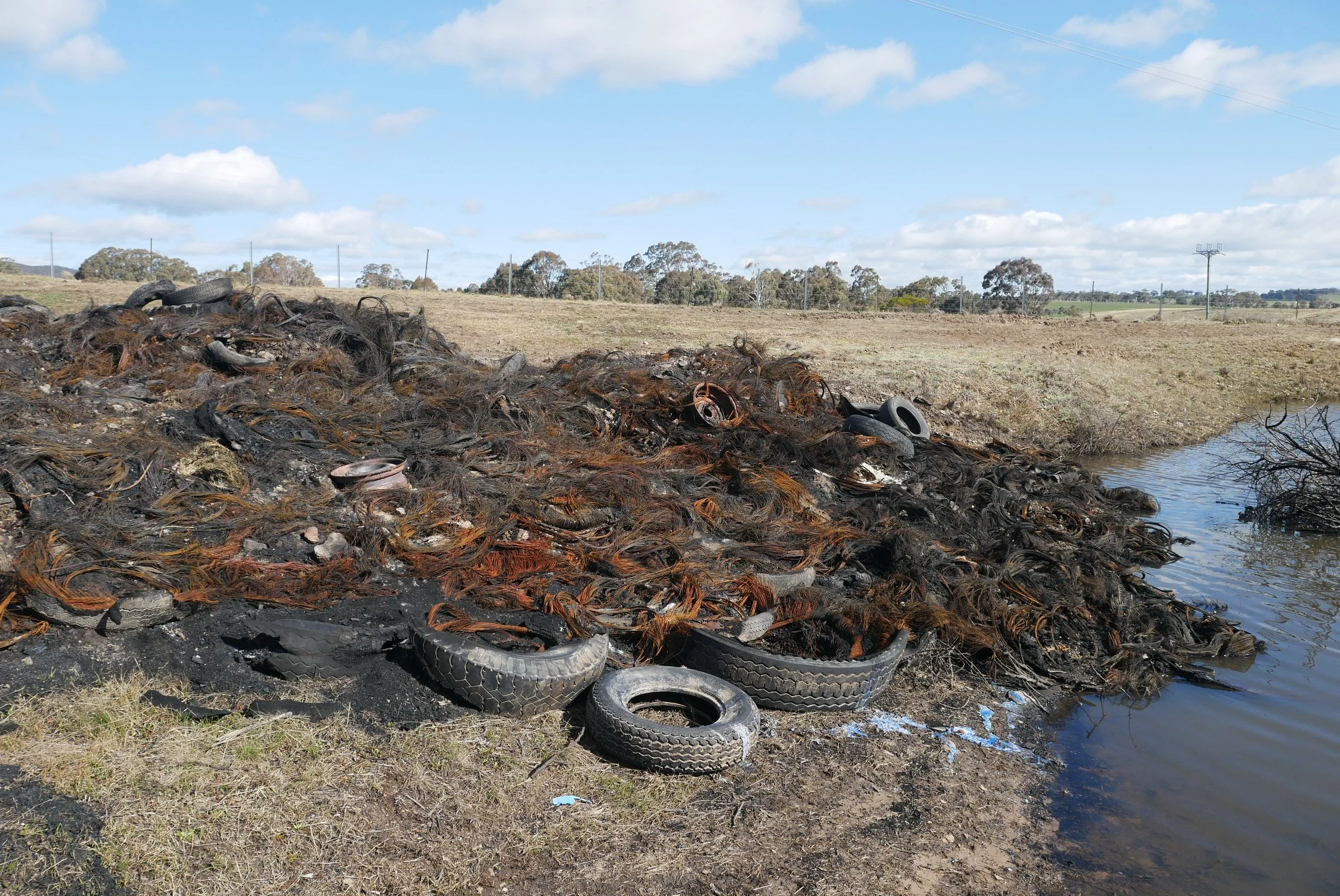
The area contaminated with burnt car tyres was approximately 100 m2
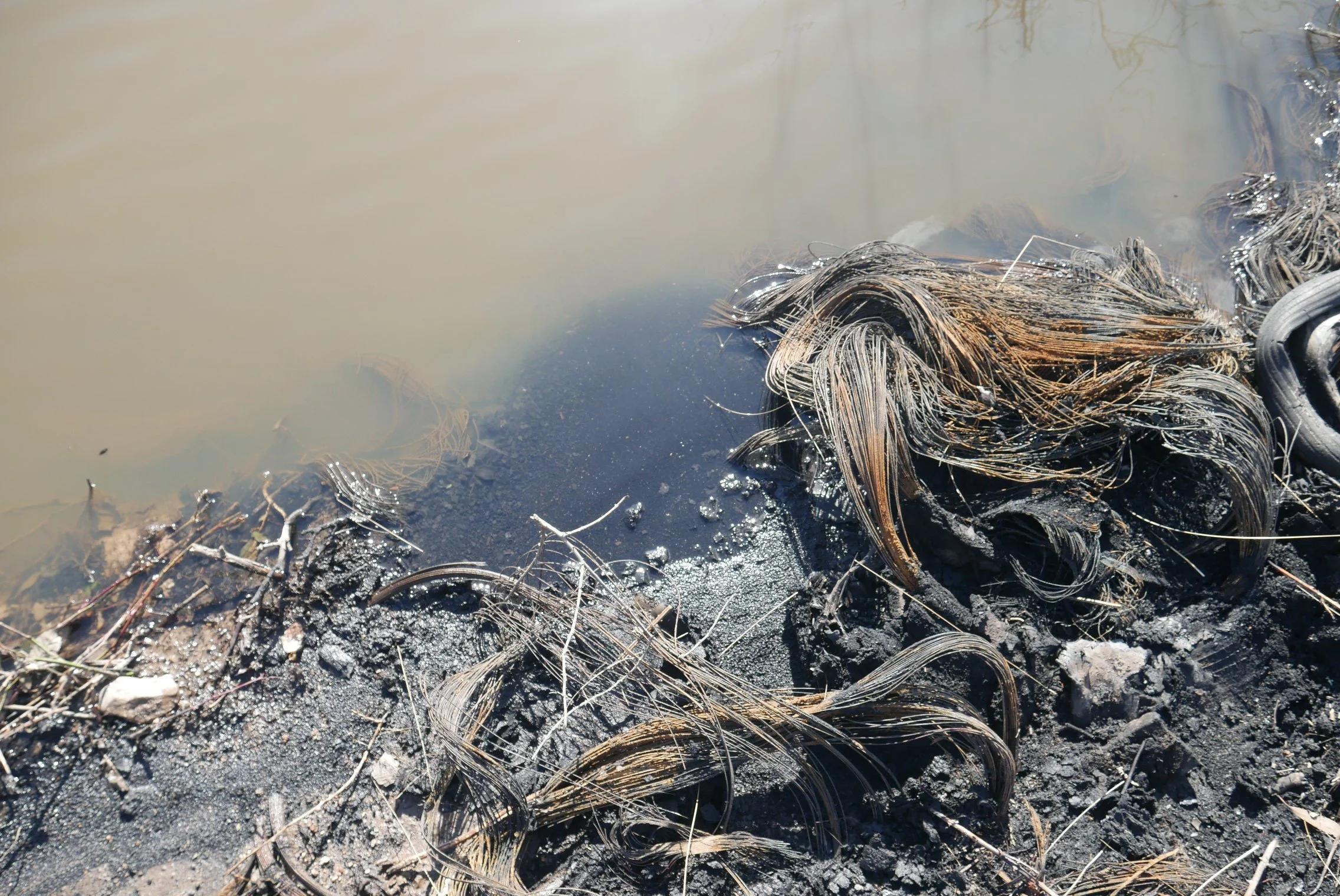
Soon after the fire there had been flooding bringing water in contact with the burnt rubber tyre remains
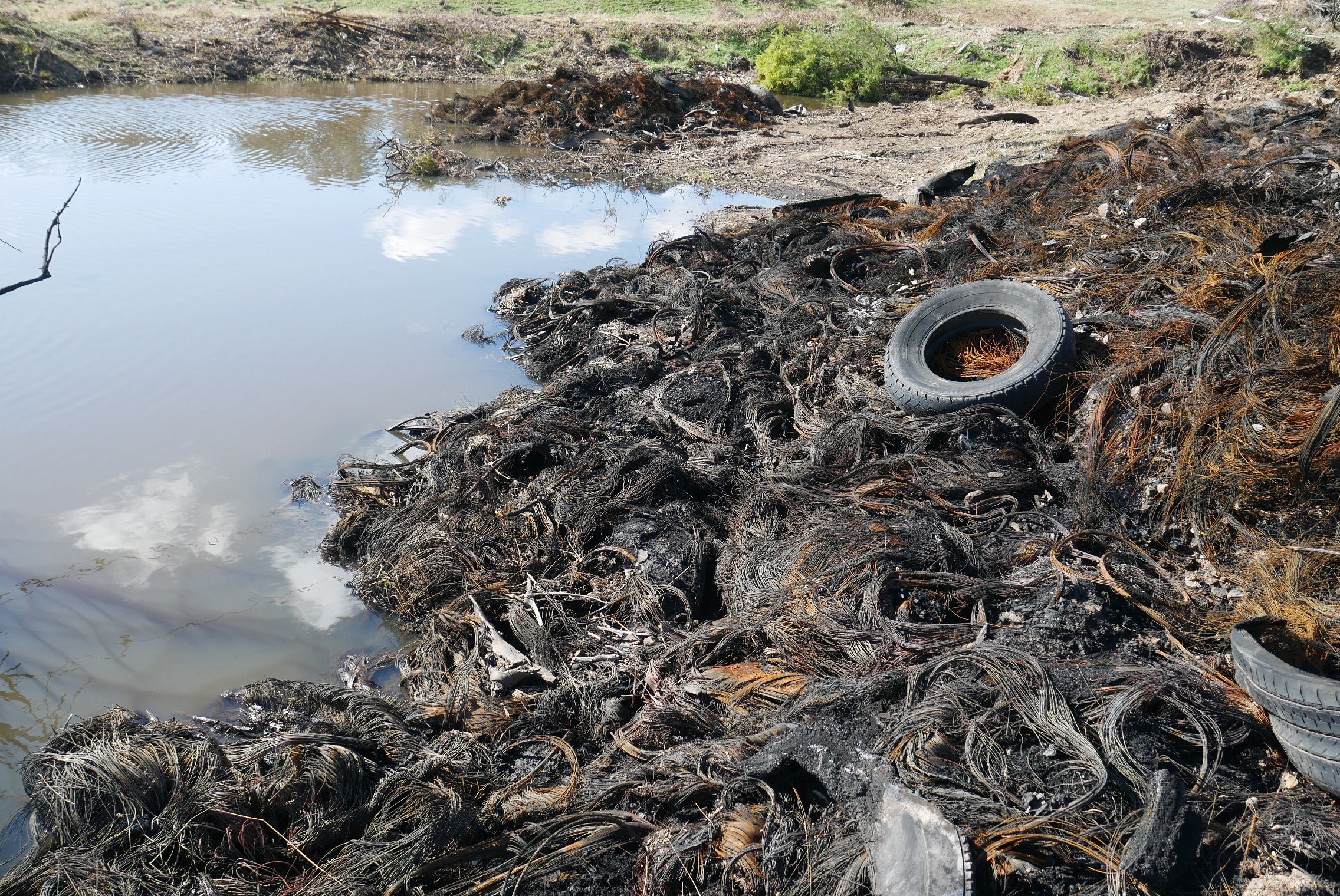
The burnt rubber tyre debris had impacted the soils and caused elevated levels of hydrocarbons and zinc
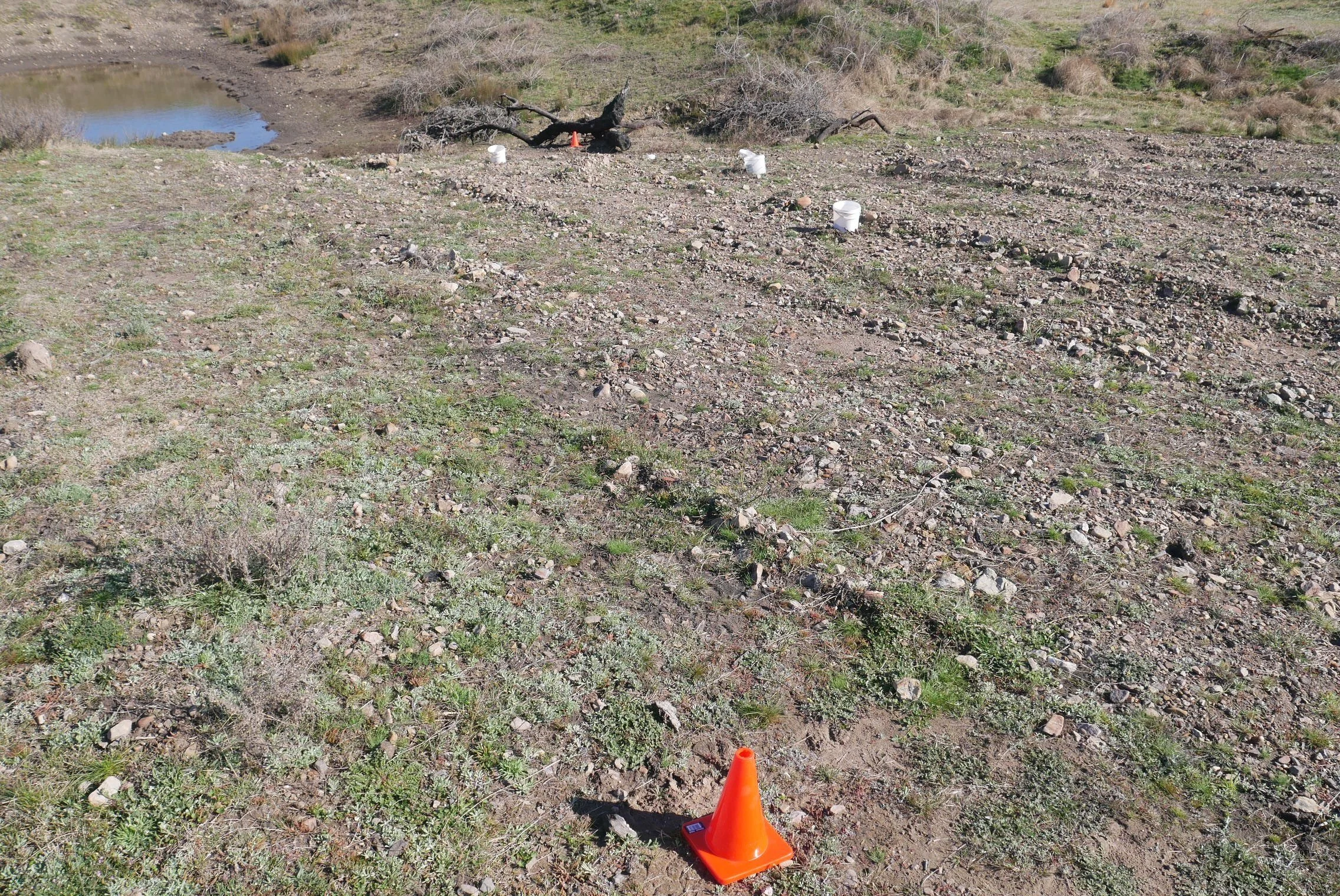
Image taken after site remediation. EE collected soils from random locations and tested for TRH and zinc to confirm if remediation was successful
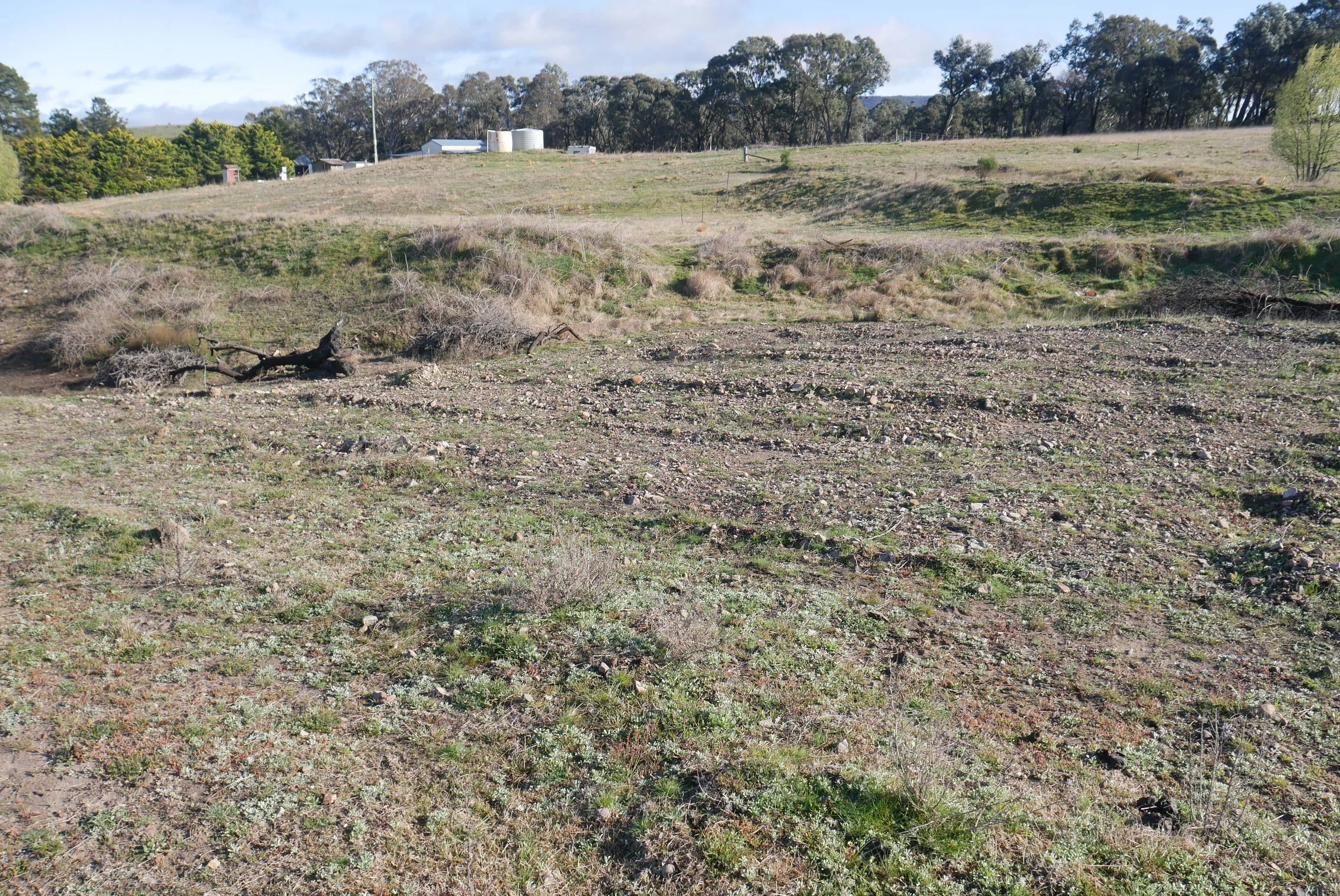
The validation testing confirmed that the site had been successfully remediated. Image showing the site after remediation