
Contaminated Site Investigations
Detailed site investigation
Brief: Earthwise Environmental (EE) was commissioned to undertake a Detailed Site Investigation (DSI) on a property that had been identified as being potentially contaminated with hazard materials (e.g., asbestos) and chemicals such as Polycyclic aromatic hydrocarbons (PAH), petroleum hydrocarbons and heavy metals.
Problem: The land was previously zoned “industrial” due to it being owned a coal mining company. The land had been subdivided and rezoned for residential use. Historic photographs revealed that a fibro cottage had also been built on the block. which potentially contained asbestos. Occupants of the land had dumped several old cars along with scrap metal on the property. The house had been demolished and the owner wanted to construct a new dwelling. Wollongong City Council were not satisfied that the land was not contaminated.
Challenge: Identify whether any potential Potential Contaminants of Concern (CoCs) were present at the site due to past land use and dumping of uncontrolled fill.
Action: EE dug several test pits to screen for asbestos while also undertaking several cores across the site to determine the depth of fill. EE compiled a comprehensive Stage 2 DSI report in accordance to the National Environmental Protection (contaminated sites) Council (NEPC) 2013 guidelines and the NSW EPA guidelines for consultants reporting on contaminated sites. The report included the following information:
The location of the site and its history
The results of the sampling and testing
Identification of lead as a potential Contaminants of Concern (CoCs)
Recommendations for remediation or management of the site
Outcome: EE found one soil sample containing lead concentrations exceeding the National Environment Protection Measure 1999 (2013) Health Investigation Level (HIL) of 300 mg/kg. The lead was likely to be from the previous house on-site, as the location of the high lead concentration matched the footprint of the house.
EE was able to recommended a solution that would safely allow the proposed dwelling to proceed with minimal impact to human health. The solution involved removing a small amount of contaminated soil and replacing it with clean soil. The client was given approval to construct a new house after the contaminated soil was removed.
-
![BH locations for DSI]()
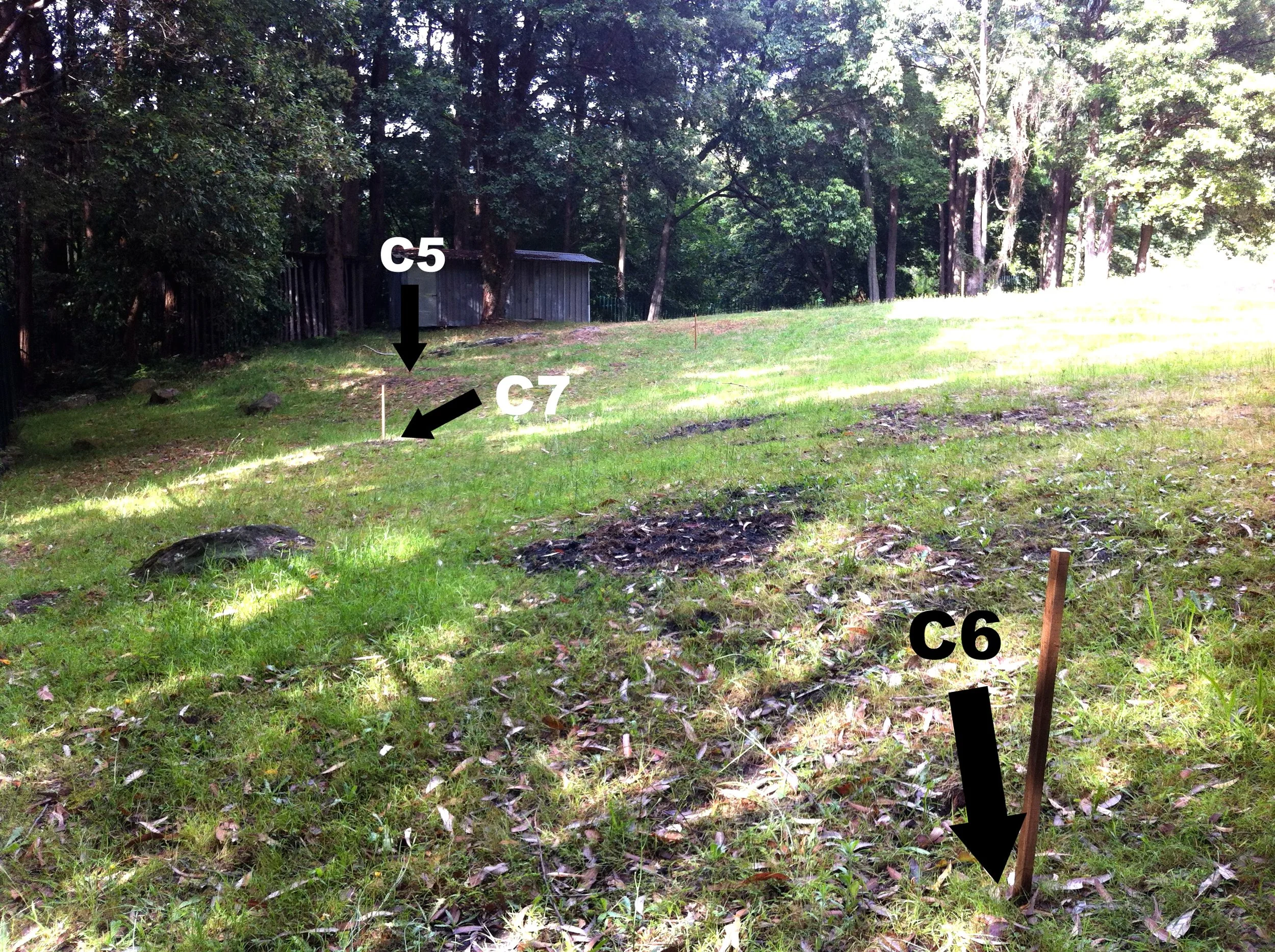
Core locations to determine depth of fill and collect soil sample for testing
-
![Photograph showing soil cores as part of DSI]()
Five deep undisturbed soil cores were taken in a systematic locations forming a transect. Fill was found to a depth of around 650 mm.
-
![Soil test pit]()
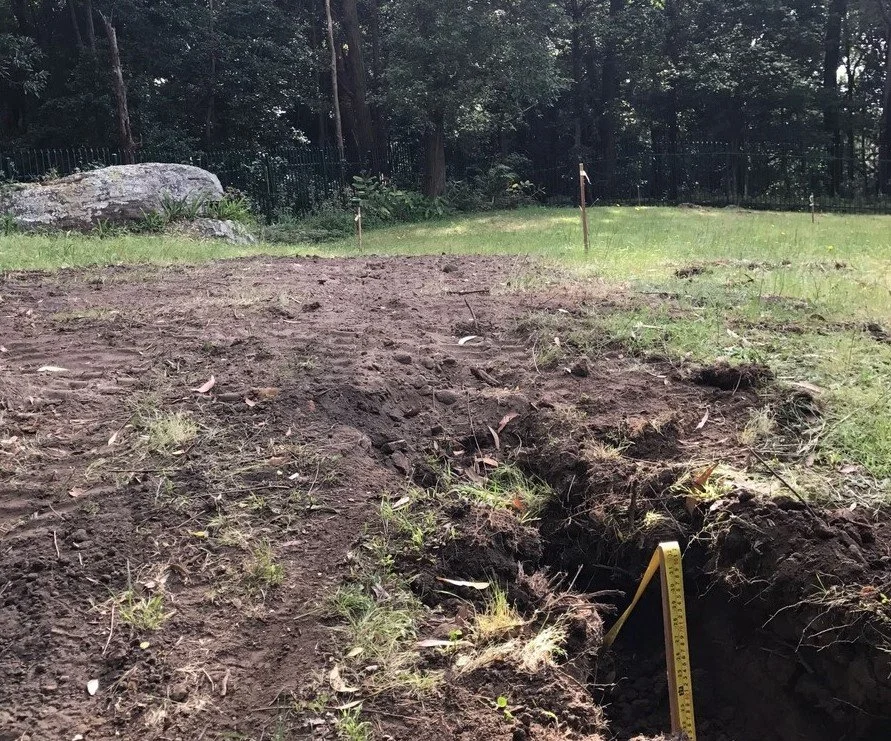
EE inspected soil test pits to determine the depth of fill, level of disturbance and allow the soils to be characterised. This information helps to develop the conceptual site model (CSM).
-
![Soil samples in jar and asbestos samples in double zip lock bag]()
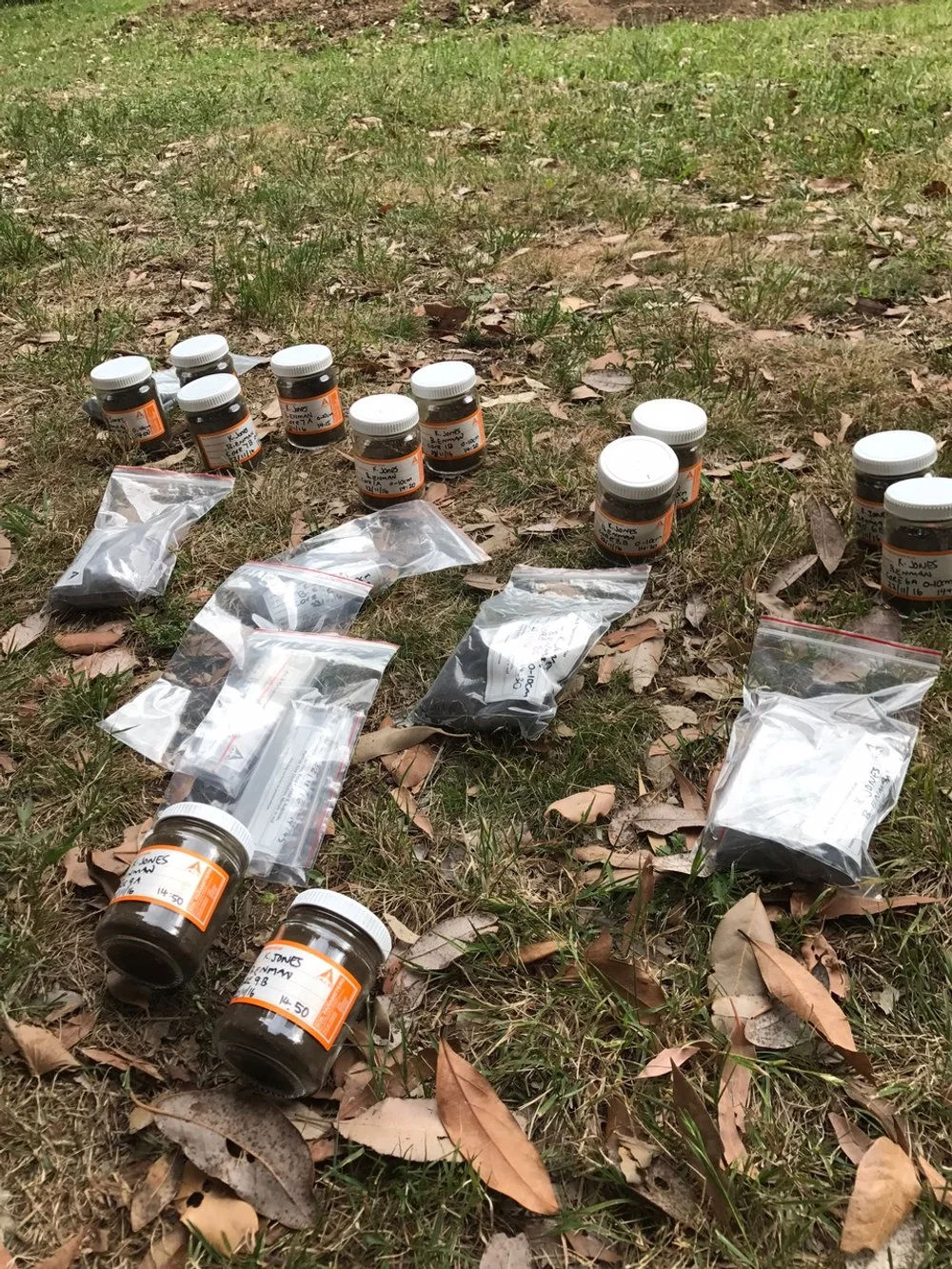
After the soils at the site inspected and described, soil samples were placed in 250 ml glass jar to test for metals, PAH and hydrocarbons